
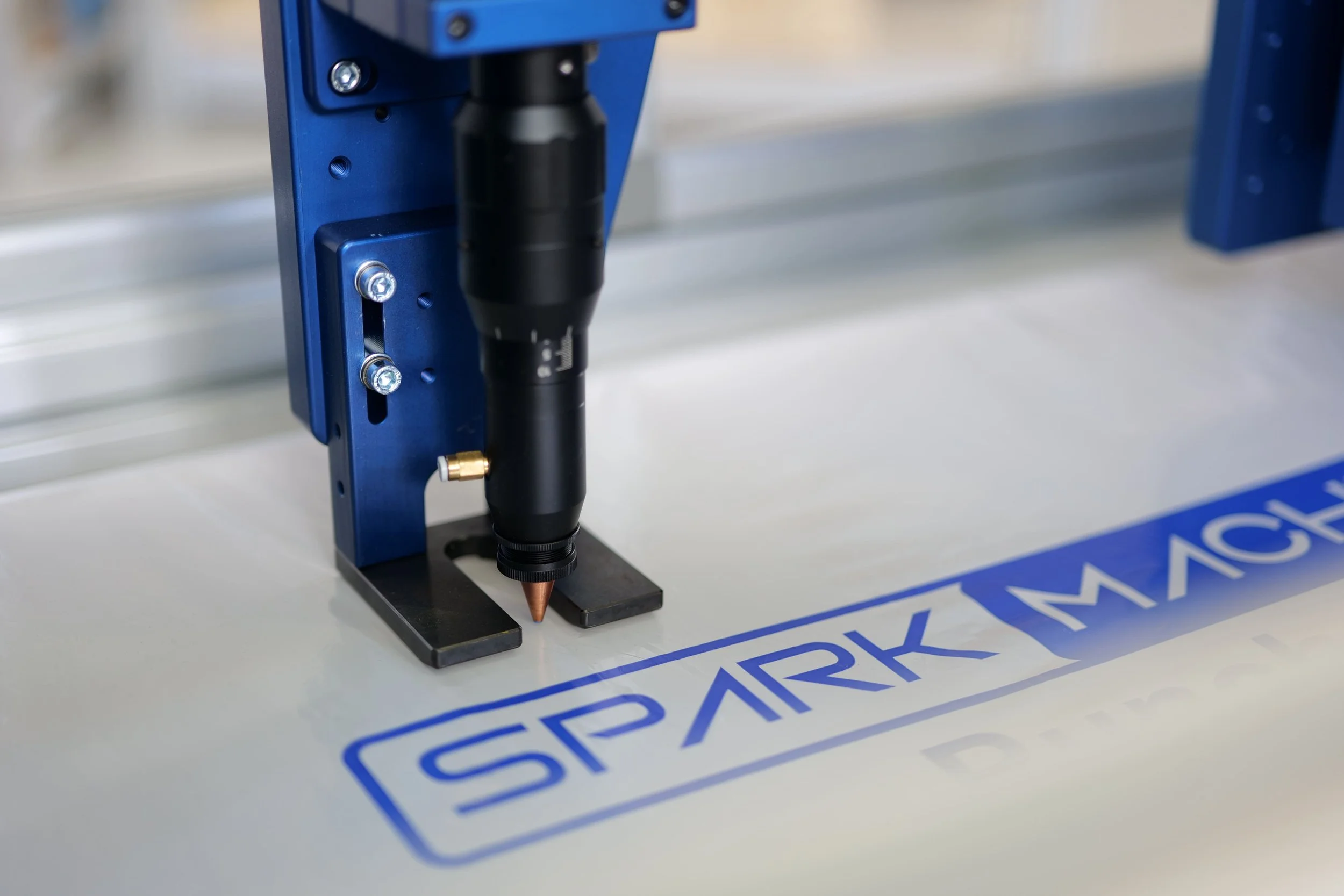
Precision Laser Micro-Perforation: Maximize Uptime, Eliminate Maintenance
Non-Contact Laser Technology: Offers a high-speed, maintenance-free alternative to traditional mechanical perforation.
Zero Mechanical Stress: Eliminates tool wear and material deformation during processing, ensuring flawless product functionality.
Industrial-Grade Reliability: Engineered for heavy-duty, 24/7 continuous production with minimal maintenance requirements.
Instant Digital Changeover: Enables rapid, software-controlled switching between different perforation and scoring patterns with zero downtime.
Extreme Processing Accuracy: Delivers unmatched precision, maintaining consistent hole diameters from 50 to 200+ microns across all types of films and foils.
Autonomous Micro-Perforation: Pushes efficiency beyond mere precision by integrating self-optimizing, autonomous laser technology with a scalable architecture, maximizing throughput while adapting seamlessly to dynamic manufacturing demands.

Series: LO Series
Function: High-precision laser micro-perforation, scoring, pre-cutting, and engraving of moving film webs, enabling controlled and repeatable material processing without mechanical contact.
Applications: Designed for advanced packaging needs including MAP/EMAP packaging, easy-open features, and breathable films used across food, pharmaceutical, and automotive sectors. Ensures extended shelf life, user convenience, and optimal material performance.
Technology: CO₂ laser-based systems available in three architectures: fixed heads for continuous lines in machine direction, fixed heads with a motorised single-axis galvo that tracks the moving web, and 2D or 3D galvanometric scanning heads that work across the web and draw any pattern. All configurations share adjustable parameters including pulse frequency, laser energy, and processing speed. Supports full integration with vision inspection and control systems for real-time monitoring, automatic correction and, on 3D scanning heads, automatic focus. Industry 4.0-ready architecture with touchscreen control, recipe management, and remote diagnostics capability.
Overview of our Laser Micro Perforators
Our laser micro-perforator range features three distinct models built on a shared platform: two are designed to perforate continuous lines along the web, while the third uses a scanning beam to draw custom patterns. Each model utilizes a CO₂ source and seamlessly integrates into your existing converting line.
Machine direction · Entry level
LaserOne Line
Fixed beam, no scanner. The movement of the web itself draws continuous perforation lines, at the lowest investment in the range.
- Maximum speed
- 150 m/min
- Hole diameter
- Ø 50–200 µm
- Machine vision
- Optional
Machine direction · High output
LaserOne Track
A motorised single-axis galvo mirror follows the film during each pulse, so the holes stay perfectly round at full line speed.
- Maximum speed
- 380 m/min
- Hole diameter
- Ø 50–200 µm
- Machine vision
- Standard
Scanning · 2D and 3D
LaserScan 2D/3D
Galvo mirrors steer the beam anywhere inside the working field: continuous lines, custom shapes, cross pre-cuts and drawings, across the web as well as along it.
- Maximum speed
- 400 m/min (2D)
- Hole diameter
- From Ø 60 µm
- Working field
- Up to 1,800 mm
Compare the laser range
| Machine direction | Scanning | |||
|---|---|---|---|---|
| Feature | LaserOne Line | LaserOne Track | Scanning laser 2D | Scanning laser 3D |
| Beam delivery | Fixed head, fixed beam | Fixed head with motorised single-axis galvo | Galvo scan head, 2 axes (X, Y) | Galvo scan head, 3 axes (X, Y + Z focus) |
| Perforation direction | Machine direction | Machine direction | Cross web and machine direction | Cross web and machine direction |
| Patterns | Continuous lines | Continuous lines | Continuous lines, holes, custom shapes, drawings, cross pre-cuts | Continuous lines, holes, custom shapes, drawings, cross pre-cuts |
| Maximum speed | 150 m/min* | 380 m/min* | 400 m/min* | Depends on focus† |
| Hole diameter | Ø 50–200 µm* | Ø 50–200 µm*, perfectly round at full speed | From Ø 60 µm* on 50 × 50 mm, Ø 100 µm on 110 and 200 mm, Ø 120 µm on 300 mm | From Ø 150 µm* on 600 × 600 mm, Ø 250 µm on 1,800 × 1,800 mm |
| Working area | One line per head | One line per head | 50 × 50 to 300 × 300 mm | Up to 1,800 × 1,800 mm |
| Focus | Fixed, auto focus optional | Fixed, auto focus optional | Fixed, auto focus optional | Motorised Z axis, automatic with machine vision |
| Machine vision | Optional | Standard | Optional | Optional |
| Functions | Microperforation, cutting, pre-cutting, scoring | Microperforation, cutting, pre-cutting, scoring | Microperforation, cutting, pre-cutting, scoring | Microperforation, cutting, pre-cutting, scoring |
| Laser source | CO₂, 80–1,000 W* | CO₂, 80–1,000 W* | CO₂, 80–1,000 W* | CO₂, 80–1,000 W* |
| Ideal for | Entry-level laser perforation on standard-speed lines | High-output lines that need round holes at speed | Precise custom patterns at high speed | Large-format patterns and wide webs |
* This value depends on the type of material, application and machine configuration.
† On the scanning laser 3D, the maximum speed depends on the focus travel the requested job needs: the more the beam has to refocus across the field, the lower the speed.
A short introduction: What is Laser Micro Perforation?
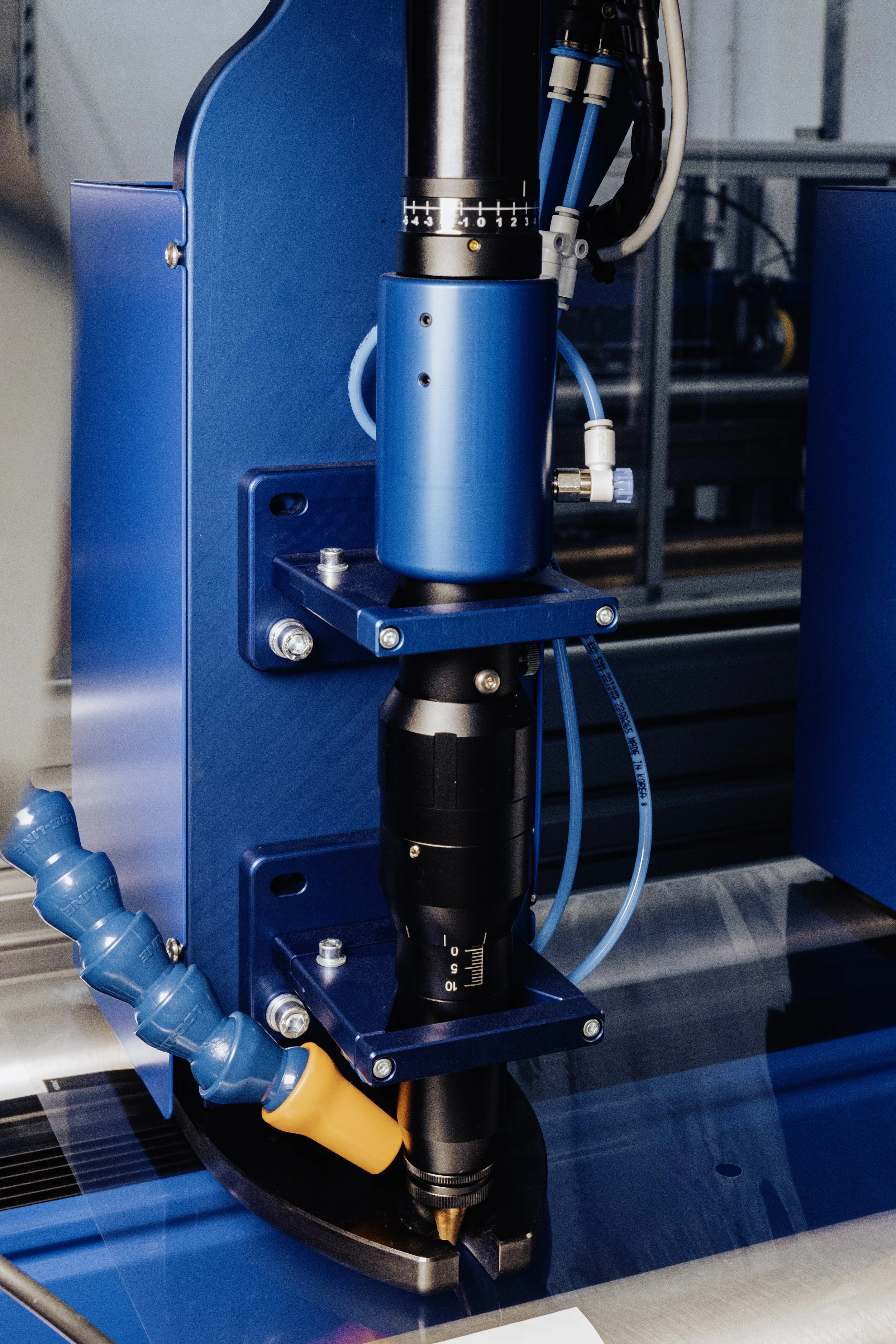
Laser microperforation is a process that uses a focused laser beam (typically CO₂-based) to create very small holes—usually between 50 and 200 microns (µm)—in thin materials like plastic films, paper, or foil.
The laser emits a high-energy infrared beam, which is focused onto the material.
The intense energy vaporizes (sublimates) a tiny area of the surface—without touching it—creating a clean, precise micro-hole.
This process happens very quickly and without mechanical contact, allowing for non-stop, high-speed production.
Main Advantages of Laser Microperforation
✔ No physical contact → no tool wear or deformation
✔ High precision → consistent hole size and placement
✔ Adjustable → hole diameter, spacing, and pattern can be easily changed in software
✔ Clean edges → no tearing or rough edges around the hole
✔ Ideal for MAP (Modified Atmosphere Packaging), breathable films, or easy-open features (via scoring)
Laser vs. mechanical perforation
| Key difference | Laser | Mechanical (needle, punch & die) |
|---|---|---|
| Technology | CO₂ laser beam, no contact with the film | Needles, or a punch and die, in contact with the film |
| Hole size | Microholes, down to a few tens of microns | Limited by the size of the needle or the punch |
| Pattern | Set in software, changed with a recipe | Fixed by the tooling, changed by hand |
| Precision over a run | Constant: nothing wears | Drops as the needles or the punch wear |
| Maintenance | No tooling, no consumables | Regular tool replacement |
| Scoring and easy-open | Same unit, no extra tooling | Requires dedicated tooling |
| Quality control | Inline camera inspection, corrected automatically | Offline sampling |
| Best for | MAP, breathable films and easy-open packaging | Large holes, high hole counts, thick materials and clean die-cut shapes |
In summary, laser microperforation offers a cleaner, more flexible, and more precise alternative to traditional mechanical methods—especially valuable in packaging, food preservation, and applications requiring controlled airflow or easy-opening.
How Laser Micro Perforation works
Functioning of Laser-Line Model
Functioning of Laser-Track Model
Spark Machinery Laser Microperforation Systems – Overview
Spark Machinery’s laser microperforation systems are built for precise, high-speed processing of materials like polymer films, paper, and laminates. Key components include:
Laser Source
Sealed CO₂ laser with adjustable power and pulse frequency. Delivers consistent microperforation at high line speeds through stable beam quality.Beam Steering / Scanning Head
Galvanometric mirrors (e.g., LaserScan 2D/3D) steer the laser dynamically across the web, enabling precise, programmable patterns without mechanical movement.Web Transport & Synchronization
Tension-controlled rollers and optical encoders ensure accurate laser triggering and consistent registration with moving substrates.Control System
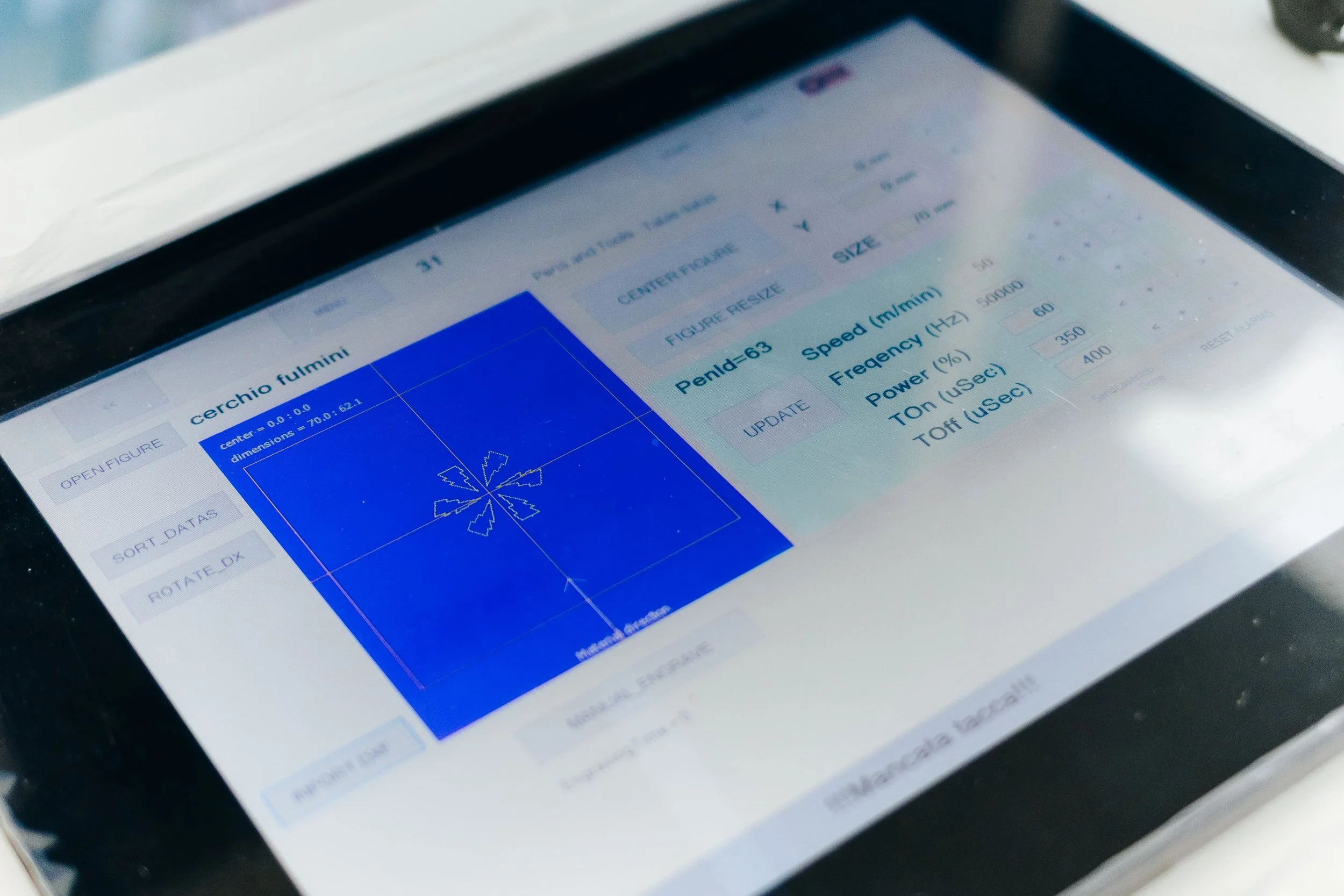
PLC with touchscreen HMI for full process control, including laser parameters, hole pitch, pattern logic, and scoring. Supports recipes, diagnostics, and optional Industry 4.0 connectivity.Adjustable Parameters
Hole size: 50–200 µm on machine-direction models, min 60 µm on scanning laser Models
Pitch & pattern: Fully programmable
Scoring: Enables easy-open or controlled-tear features via subsurface ablation
Real-Time Quality Control:
Employs an optional vision system that monitors hole size, shape, and pitch in real time, leveraging closed-loop feedback for automatic parameter adjustments to guarantee consistency and minimize material waste.
Advantages of Laser Micro Perforation
-
Laser perforation doesn’t rely on mechanical tools, eliminating wear and reducing downtime.
-
Maintains consistent microperforation even at high web speeds, ideal for fast production environments.
-
Enables flexible perforation designs—linear, staggered, or custom—adaptable via software without hardware changes.
-
Microperforation optimizes gas exchange, helping extend the freshness of packaged products.
-
Modern laser systems are highly efficient and require minimal maintenance compared to mechanical alternatives.
-
Integrated camera systems enable real-time inspection and automatic corrections, ensuring consistent product quality.
Scanning laser: working areas and what they can do
Functioning of 2/3 axis Scanning Laser system
Where a fixed head draws lines along the film, a scanning head steers the beam with two galvanometric mirrors and can place a hole anywhere inside its working field. Nothing moves except the beam itself, so the machine works across the web as well as along it: cross-web perforation lines, continuous cuts and scores, custom shapes, pre-cuts and drawings, all from a recipe, with no tooling to change.
That freedom opens applications a machine-direction laser cannot reach. A tear line running across a pouch. Venting zones placed exactly where the product needs to breathe, and nowhere else. Easy-open features on stick packs and sachets. Even a logo perforated into the film. Moving from one job to the next takes as long as loading the next recipe.
The size of the working field is the choice that matters. A small field concentrates the beam: it opens the smallest holes and runs at the highest speed. A large one covers wide webs and big patterns, but the spot grows with it. Two galvo axes cover fields up to 300 × 300 mm; a third axis drives the focus and extends the reach up to 1,800 × 1,800 mm, with the focal plane held automatically when the machine vision is fitted.
Select a working area below to see what each one can do.
Working areas
Drawn to scale. Select a working area to see its minimum hole size and speed.
2D, two galvo axes
Four field sizes, for precision and speed
3D, three galvo axes
Large fields with a motorised focus axis
Dotted square: the largest 2D field, 300 × 300 mm.
| Working area | 2D / 3D | Minimum hole | Speed |
|---|---|---|---|
| 50 × 50 mm | 2D | Ø 60 µm* | Up to 400 m/min* |
| 110 × 110 mm | 2D | Ø 100 µm* | Up to 400 m/min* |
| 200 × 200 mm | 2D | Ø 100 µm* | Up to 400 m/min* |
| 300 × 300 mm | 2D | Ø 120 µm* | Up to 400 m/min* |
| 600 × 600 mm | 3D | Ø 150 µm* | Depends on focus† |
| 1,800 × 1,800 mm | 3D | Ø 250 µm* | Depends on focus† |
- Configuration
- 2D
- Working area
- 50 × 50 mm
- Minimum hole
- Ø 60 µm*
- Speed
- Up to 400 m/min*
* This value depends on the type of material, application and machine configuration.
† On the 3D configuration, the maximum speed depends on the focus travel the requested job needs: the more the beam has to refocus across the field, the lower the speed.
Why choose Spark Machinery?

Uncompromising Quality, Reliability & Performance
Spark Machinery designs and builds high-performance systems known for their precision, durability, and consistent output. Our machines operate reliably even under high-speed, high-demand production conditions, delivering top-tier results with minimal downtime.
Tailor-Made Solutions for Every Customer
We don’t believe in one-size-fits-all. Every system is engineered based on the specific needs of our customers—whether it’s material type, production speed, perforation pattern, or integration with existing lines. This ensures optimal efficiency and seamless operation from day one.End-to-End Support
Our systems are built for Industry 4.0: machines are managed from a touch-screen panel where your operators store every perforation parameter as a recipe, and it connects to your factory systems to exchange production data with your MES or ERP. Through remote assistance our technicians check parameters, diagnose faults and update the software without waiting for a site visit, and support your team live during commissioning or when a new recipe is set up.Driven by Research & Innovation
At Spark Machinery, continuous improvement is part of our DNA. We invest heavily in R&D and testing to develop cutting-edge laser technologies, improve system capabilities, and stay ahead of evolving market demands. Innovation is what keeps our customers competitive—and we deliver it with every machine.
Applications of our Laser Micro Perforators

-
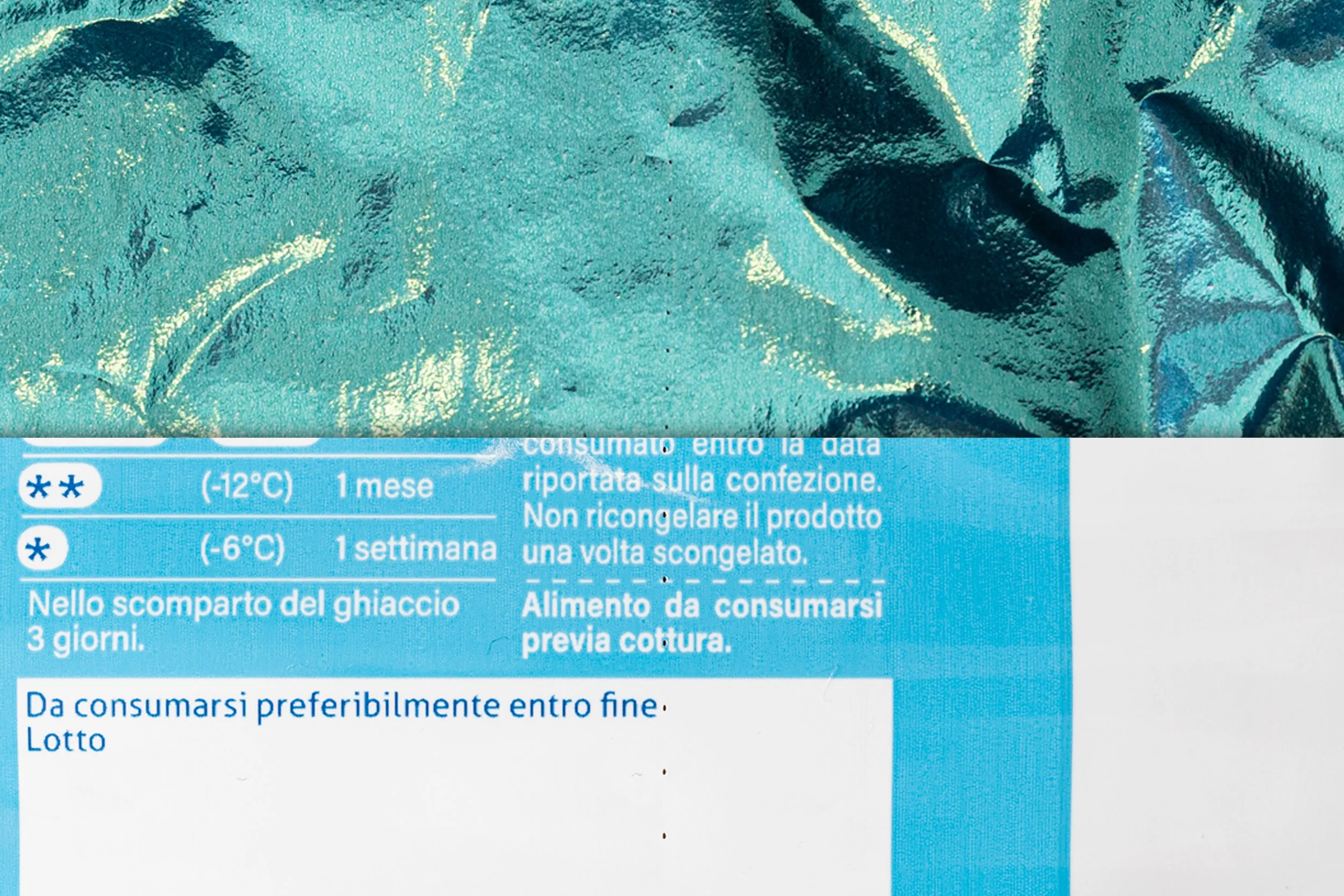
Extends shelf life by enabling controlled airflow in fresh produce, bakery, and snack packaging. Supports Modified Atmosphere Packaging (MAP) by regulating gas exchange.
-
Ensures product integrity in sterile blister packs and allows easy-tear access for single-dose sachets and medical pouches.
-
Improves breathability and performance in insulation, acoustic materials, and functional films used in vehicle interiors and engine components.
-
Enhances comfort and breathability in products like diapers and sanitary items. Also supports clean dispensing in wipe packaging.
-
Controls humidity and temperature in greenhouse and mulch films; maintains seed viability through ventilated packaging.
-
Prevents bag swelling in chemical or powder packaging and allows for functional or decorative perforation patterns.
Get expert advice for your Micro Perforation Needs
Choosing the ideal laser micro-perforating machine can be a complex decision, given the specialized beam dynamics and material considerations involved. Spark Machinery invites you to a free, no-obligation consultation with our laser technology experts. Discover how our high-precision laser perforation solutions can optimize your production speeds, enhance hole consistency, and maximize efficiency—ensuring a smart investment tailored to your exact manufacturing needs.

PERSONAL CONTACT
Looking for advanced industrial packaging or custom perforation solutions?
Discover how tailored airflow, moisture control, and material efficiency can elevate your logistics and product protection.
Contact our team today to explore custom-engineered perforation systems designed for your specific industry needs.
👉 Get in touch now or request a free consultation
DANA NURTAZINA
Commercial Export Office